
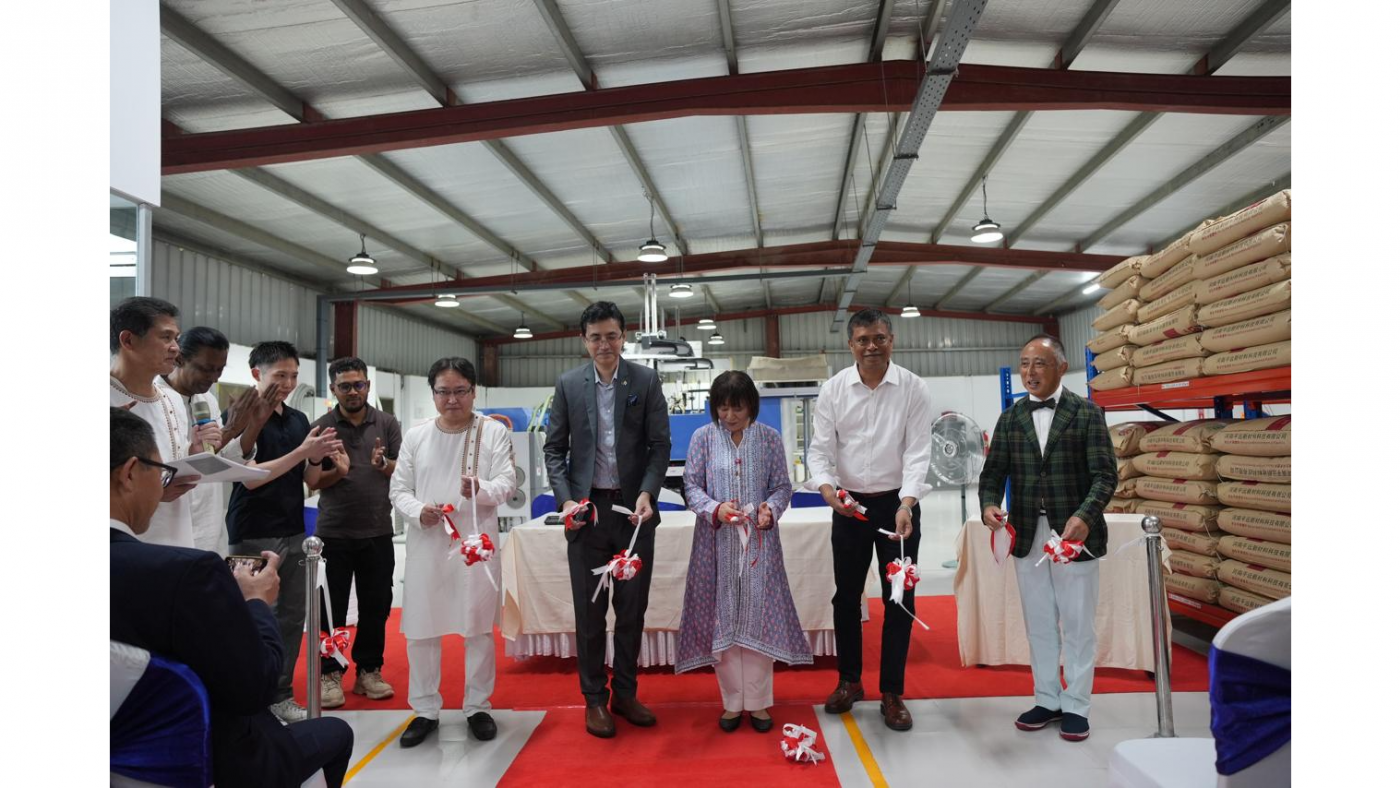
Young Labels Ltd and Japan-based Toska-Bano'k Co Ltd have started local production of the FasBano'k garment tagging system in Bangladesh, expanding the availability of the Japanese-developed technology for the country's apparel and textile industry.
The system and its local production were presented at an opening ceremony held yesterday (25 September) at the Bangla-Bano'k factory in Dhaka, bringing together representatives from Japanese organisations, Toska-Bano'k and Young Labels, according to a press release.
Embassy of Japan in Bangladesh First Secretary Saori Fujimoto; Daisuke Arai of Jetro Dhaka; Yasuyuki Marahashi of Jica; Toska-Bano'k Co Ltd President Masao Terunuma; and Young Labels Ltd Managing Director S Mahmud (Mujbik) attended the event.
FasBano'k is designed to attach tags using a dedicated hand tool together with specially designed tag loops or string fasteners.
The system provides an alternative to conventional processes in which workers manually string or tie individual tags during garment finishing.
Toska-Bano'k says its fastening mechanism allows tags to be attached more quickly than conventional manual methods, with the system designed for continuous operation. The technology can be used for garments, footwear and other textile products.
Material options
The tagging system is available with a range of material options, including recycled plastic, polyester, cotton, jute and paper.
The different material choices allow manufacturers and brands to select tagging materials according to product specifications, sourcing requirements and sustainability considerations.
For applications using recycled materials, Transaction Certificates (TCs) can also be provided where applicable for buyers and manufacturers requiring documentation relating to recycled content.
The availability of different materials is also relevant to the apparel industry's growing focus on material sourcing, traceability and sustainability.
Production in Bangladesh
Young Labels Ltd, a Bangladesh-based garment accessories and labelling company, is working with Toska-Bano'k to make the FasBano'k system available to local manufacturers.
Toska-Bano'k has production and related operations in Japan, China and Vietnam, while production of the tagging system has now also begun in Bangladesh.
The local facility is expected to support supply to Bangladesh's apparel and textile industry alongside Young Labels' existing production operations.
The move follows the partnership announced by Young Labels and Toska-Bano'k in November 2025 to introduce the Japanese company's tag loop and string fastening technology to the Bangladesh market.
The latest development comes as garment manufacturers continue to examine production processes where labour-intensive operations can be reduced or streamlined.
Tag attachment is one of the finishing activities carried out across large production volumes, making the process particularly relevant to factories handling high-volume orders.
The FasBano'k system offers manufacturers an alternative approach to this operation, while its range of material options allows factories and buyers to consider different requirements for individual products.
The development also reflects continuing business and technology links between Japan and Bangladesh in the apparel sector.
Young Labels said the availability of Japanese-developed production technology provides local manufacturers with another option as the garment industry responds to changing requirements relating to productivity, sourcing, traceability and sustainability.
Through its collaboration with Toska-Bano'k, Young Labels is making the tagging system and its locally produced components available to Bangladesh's garment and textile industry.