Your design
Artwork, patterns and constructions developed for your brief are used on your programme and not offered to anyone else.

We do not sell a catalogue. We take a brief — a category, a price point, a season — and take it through design, materials, sampling and production until it arrives at your warehouse packed to your retailer's manual.
Pick a stage to see what happens, who is involved and what you get at the end of it. The same commercial contact carries the programme through all five.
We start from whatever you have — a mood board, a competitor sample, a sketch or a size chart. Our development team converts it into a knittable design: silhouette and length, rib and welt structure, heel and toe construction, cushioning zones and logo placement.
Where a design cannot be knitted as drawn, we say so at this stage and propose the closest construction that holds the look — before anyone commits to a costing.
Material decides how a sock feels on day one and how it looks after twenty washes. We match the yarn to the category and the price point: combed and organic cotton for everyday, bamboo for softness, wool for warmth, nylon and polyester blends for durability, elastane for recovery, and recycled options across most constructions.
Colours are confirmed on knitted swatches rather than on screen, because a shade behaves differently once it is looped into a rib. Patterns — jacquard, stripes, argyle, mesh panels and terry zones — are programmed against the gauge the product will actually run on.

Prototypes are knitted on the same machine type as production, then linked, washed, boarded and packed exactly as the bulk will be. That is the only way a sample tells you the truth about fit, cuff grip, toe-seam feel and how the sock recovers after washing.
Sample rounds run until you approve. The approved pair becomes the reference: we retain a counter-sample and the specification is locked into a production card that every later run is checked against.

Production runs against the locked card: yarn issued to the stated blend, machines set to the approved gauge and tension, toes linked, product washed and boarded to size, then inspected before packing. In-line checks catch drift while it is still correctable rather than at final inspection.
Nothing carries our name. Labels, tags, bands and cartons are yours, and the goods are produced only for your programme.
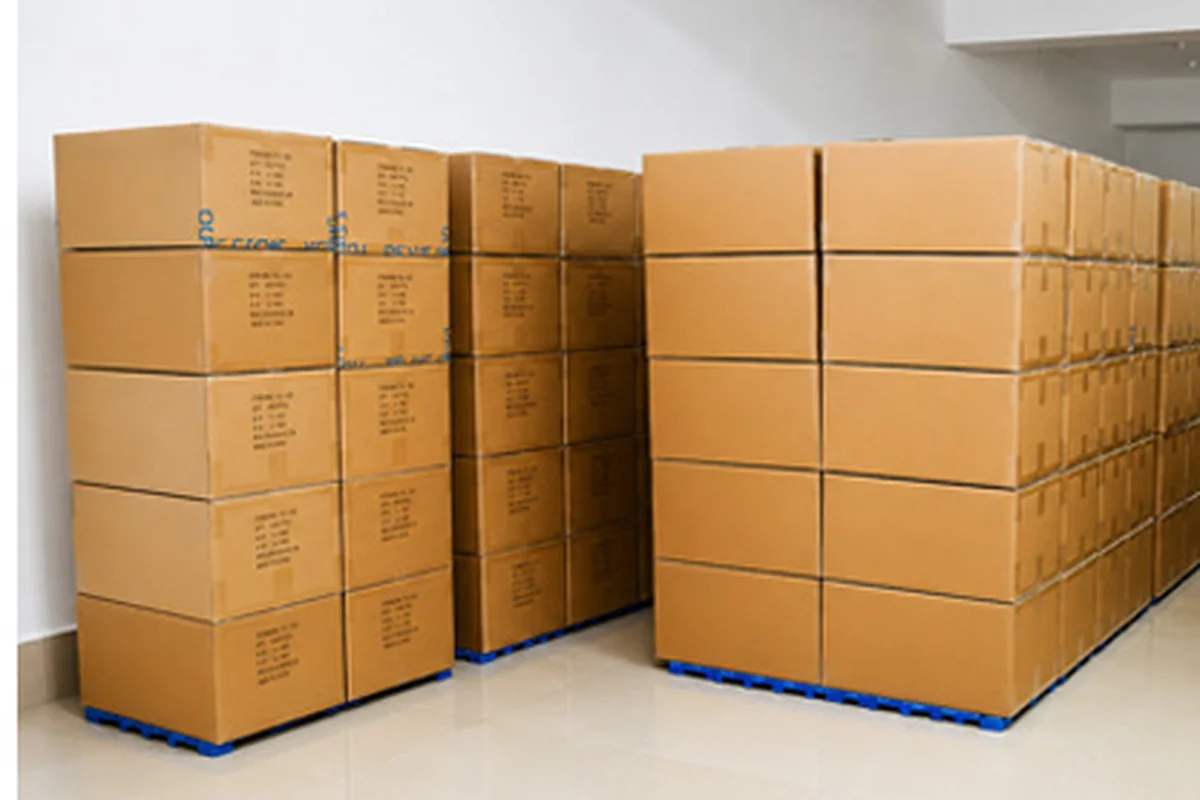
Packaging is part of the product, not an afterthought at the end of the line. We develop and produce the presentation your channel needs — bands and belly wraps, printed headers, hang tags, hangers, polybags, gift boxes, multipacks and shelf-ready cartons — with barcodes and carton markings set up to each retailer's packing manual.
Once a programme is live, machine hours are reserved against confirmed orders and status is reported against real milestones. If a date comes under pressure, you hear it while there is still time to act, not on the day the container was due.

You do not need a full technical pack. These six points are enough for us to come back with feasibility, a material route and an honest lead time.
Private label only works if the boundary is clear. This is where it sits.
Artwork, patterns and constructions developed for your brief are used on your programme and not offered to anyone else.
Every label, tag, band, sticker and carton carries your identity. There is no Young Socks marking on the product or the pack.
The locked production card and retained counter-sample exist to protect your standard across repeats — and are available to you.
Ranges, costings and launch timing stay between us. We are happy to work under your NDA from the first enquiry.
Category, price point, quantity, delivery window and packing channel is enough. You will get feasibility, a material route and a realistic lead time — not a sales deck.